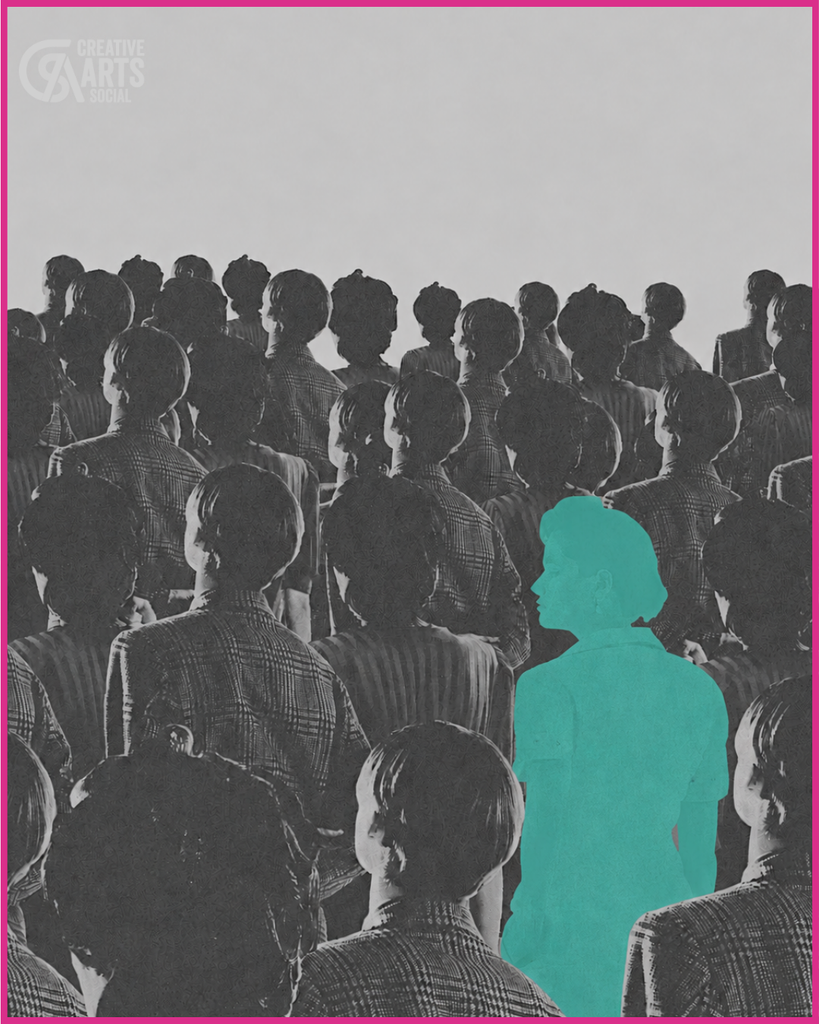
Sometimes the language of welcome remains while the conditions of belonging are absent. The pattern is easy to recognise: you are asked for your perspective, but not paid for the time it takes to share it. You are invited into a conversation after the decisions have already been made. Your lived experience is welcomed, but your knowledge is treated as an optional extra rather than expertise.
How can we build relationships and organisations capable of resisting oppression — without reproducing its patterns?
Earlier this month, the CAS team came together for a learning session with Martha Awojobi, founder of JMB Consulting and creator of Uncharitable. Martha’s work focuses on anti-racist practice, political education and helping organisations build the relationships needed for justice and liberation.
Conversations about belonging have been gathering momentum across the creative industries for many years, in response to the limits of approaches that open the door without changing the conditions inside. These conversations have opened up more inclusive ways of thinking and helped us move beyond representation alone as the benchmark for inclusion. They have also pushed us to ask how we create cultural spaces that last: spaces where people feel they have a place, can contribute and are supported to remain.
A clear theme has emerged: belonging requires us to redress imbalances of power by questioning entrenched hierarchies and unequal relationships between institutions and communities, commissioners and contributors, and those who hold resources and those expected to deliver.shared point of reference
For CAS, belonging is too important to sit in the background as a supporting idea. It shapes how we work, who we work with, the relationships we build and the cultural spaces we want to help create. That is why we felt it needed its own definition: one that reflects the values, questions and practices at the heart of our work.
This work sits within a wider and growing conversation across culture. We are inspired by Daniel Regan’s (be)longing, developed with Bethlem Gallery through creative research, public conversations and an exhibition exploring the complexities of belonging, Unbelonging and longing. We also recognise the Museums Association’s 2025 conference, Perthyn – Belonging, which placed belonging at the centre of discussions about museums, civic life and shared power.
Our definition gives us a shared point of reference. It helps us name what we are working towards, challenge ourselves when our actions fall short and make belonging visible in the everyday choices we make. It is not intended to close the conversation, but to hold us accountable to it. Read it below.
IntroducingWhat We’re Engaging With, a new three-part series fromCreative Arts Social, where staff and people from across the CAS community share the art, culture and ideas they’re engaging with across three connected pieces, using them as a starting point to explore wider questions around identity, belonging, and legacy.
The first three-part contribution comes fromSamantha Allen, Founder and CEO of Creative Arts Social. She begins withFrida Kahlo, reflecting on what happens when a woman’s carefully constructed identity becomes something interpreted, reproduced and commercialised by others.
Frida Kahlo spent her life authoring herself. Through self-portraiture, dress, symbolism and an uncompromising embrace of her Mexican identity, disability, pain and politics, she resisted the standards through which women, and particularly women’s bodies. were expected to be seen. Her image was not incidental to her work. It was one of the ways she claimed the right to define herself.
That was why I went to Frida Kahlo: Making of an Icon at Tate Modern expecting to encounter the artist behind one of the most recognisable faces in modern art and to learn more about someone whose work I already knew. Instead, I left asking what happens when a woman’s carefully constructed identity becomes an image that everyone else feels entitled to use.
There were only around 30 works by Frida Kahlo in the exhibition, and they were completely diluted by the approximately 200 works by contemporary artists and other figures, including her husband, Diego Rivera. Rather than giving greater context or insight into Kahlo’s work, many of these additions seemed to overshadow it. I came away feeling that the exhibition had taught me very little about Frida that I did not already know.
When Yuko Kikuchi left her role as the Victoria and Albert Museum’s Head of Academic Programmes in January, she released a whistleblowing statement, drafted the previous winter, that gained public attention after a July interview with The Art Newspaper (1). Reflecting on her time at one of the UK’s leading cultural institutions, she described pervasive systemic racism and the isolation of being “the only non-white person in the room”. Students echoed her concerns, contrasting the museum’s visible image of inclusion and diversification with the “imperialistic and colonial origins” they felt remained unmistakably at its core.
This, of course, isn’t a story about one museum or one person’s experience. The V&A is simply the latest institution to expose a question the cultural sector has yet to answer: what became of the commitments to equity and anti-racism that so many cultural organisations made in the wake of 2020? The V&A itself made explicit commitments then. In Black Lives Matter: Race and Equality at the V&A (2), director Tristram Hunt acknowledged the need to confront “unspoken racism” across the museum, from its workforce and programming to its collections and interpretation. Recognising the V&A as “a museum born of the colonial moment”, he promised greater urgency in addressing its colonial history and amplifying Black and minority voices.
The gap between those promises and Kikuchi’s account six years later is the central question. Black Lives Matter began in 2013 in response to systemic police violence, but George Floyd’s murder in 2020 made it a catalyst for collective action across the cultural sector. In the arts, this crystallised through #BlackoutTuesday (3), which grew from #TheShowMustBePaused, Jamila Thomas and Brianna Agyemang’s call for the music industry to pause business as usual and confront its relationship to racism. As the action spread beyond the industry, it helped prompt wider commitments on workforce and board diversity, anti-racism and programming across arts and heritage.