

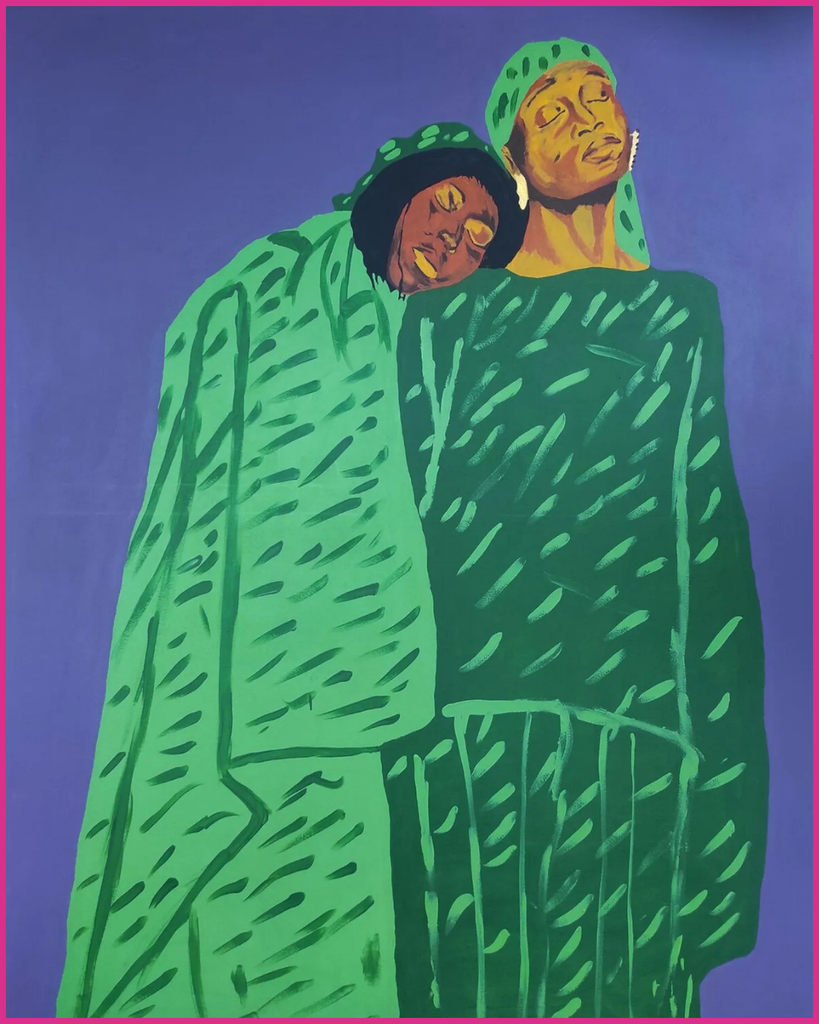
Sometimes the language of welcome remains while the conditions of belonging are absent. The pattern is easy to recognise: you are asked for your perspective, but not paid for the time it takes to share it. You are invited into a conversation after the decisions have already been made. Your lived experience is welcomed, but your knowledge is treated as an optional extra rather than expertise.
Being valued is reflected in whether expertise is budgeted for, whether fees cover preparation and follow-up as well as the public moment, whose names are credited, and who has authority over priorities and decisions. These are not neutral choices: they determine whose knowledge can shape an organisation rather than be extracted from it. The pattern is not confined to staff: it also appears in how institutions engage communities.
Community partnerships are too often tied to short funding cycles: people are brought in for a project, offered token hospitality rather than fair payment, then left without a voice in what happens next. Consultation is not the same as shared power. Belonging means communities can co-design, lead and challenge decisions — including when their priorities feel uncomfortable to the institution.
UK evidence points to the material cost of these choices. Bectu’s 2025 survey found that 39% of creative-industry workers had felt pressured to work for free, while 56% of Global Majority respondents said pay inequality exists in their workplace. Runnymede Trust’s 2024 research with Black women in leadership records one participant’s description of this compounded effort: “I’m Black. I’m a woman, I’m working class. I must try 10, 15, 20, 25 times.” If an organisation wants lived experience and community knowledge, the cost should be built into the project budget from the beginning — not sought after decisions and resources have already been allocated.
Arts and heritage research shows that who is resourced is also bound up with power. Art Fund reports that, in 2021, around 6% of workers in Arts Council England National Portfolio museums identified as Black, Asian or ethnically diverse. Against the wider context, the 2021 Census recorded that 18.3% of people in England and Wales, and 46.2% of London residents, identified with Asian, Black, Mixed or Other ethnic groups. Art Fund’s research also records curators describing a lack of influence over decision-making in large institutions, and calls for sustained investment in pathways to leadership. Representation without authority is not belonging.
For Global Majority artists, colleagues and communities, being undervalued can mean being expected to explain exclusion, advise on representation, make an institution more welcoming, or carry the weight of a whole community’s experience. Art Fund’s research identifies the emotional labour of sharing personal and cultural experience with institutions, alongside a deficit of resources and unpaid caring. This work is skilled, consequential labour — and it should be planned, credited and paid for.
Belonging asks us to look at what our organisations reward, resource and rely on. The evidence above makes this concrete: unpaid or underpaid expertise, excluded decision-making and blocked progression are not isolated oversights; they are patterns of organisational value. Whose work is treated as essential? Whose contribution is visible only when it is convenient? And who has the power to decide what counts as value? A place cannot claim to create belonging if it depends on people giving more than they are recognised, trusted or resourced to give.
A question to take with you: what does your latest budget say about whose knowledge you value?
References
- Art Fund (2022). Change from the top: Impact of ethnic diversity initiatives on curatorial roles in the UK arts and heritage sector.
- Arts Council England. Relationship Guide for NPOs and IPSOs 2026–27.
- Bectu (2025). Big Survey: Hiring and Progression.
- GOV.UK. Regional ethnic diversity (Census 2021).
- Runnymede Trust (2024). Misogynoir in the Workplace: Understanding the Experiences of Black Women in Leadership Positions.