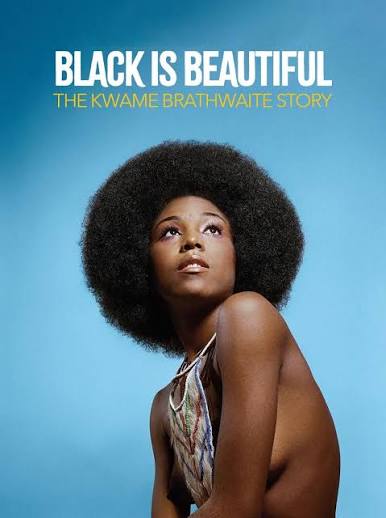
This is the second of our Brand and Digital Communications Officer Michelle Kambasha’s What We’re Engaging With. After food, she turns to photography, through Kwame Brathwaite’s Black Is Beautiful.
Part of my MA research looks at Black spectatorship: how Black audiences watch film and television that was rarely made with them in mind. One story from that research has stayed with me. In an early study of cinema audiences, a Black schoolgirl described coming home after a Clara Bow film, dressing like the star and looking at herself in the mirror, only to realise she could never become her. The film historian Agata Frymus uses moments like this to show that Black audiences could love Hollywood and feel shut out by it at the same time. Sara Ahmed’s work on affect helps explain why.
I’m Michelle Kambasha, Brand and Digital Communications Officer at Creative Arts Social. What We’re Engaging With is where the CAS team shares the ideas, resources and experiences shaping our thinking and practice, and over the next three weeks I’ll be sharing three posts: one on food, one on visual culture and one on public history. Each looks at how everyday culture shows up in questions around belonging. I’m starting with food, and a documentary series I keep coming back to.
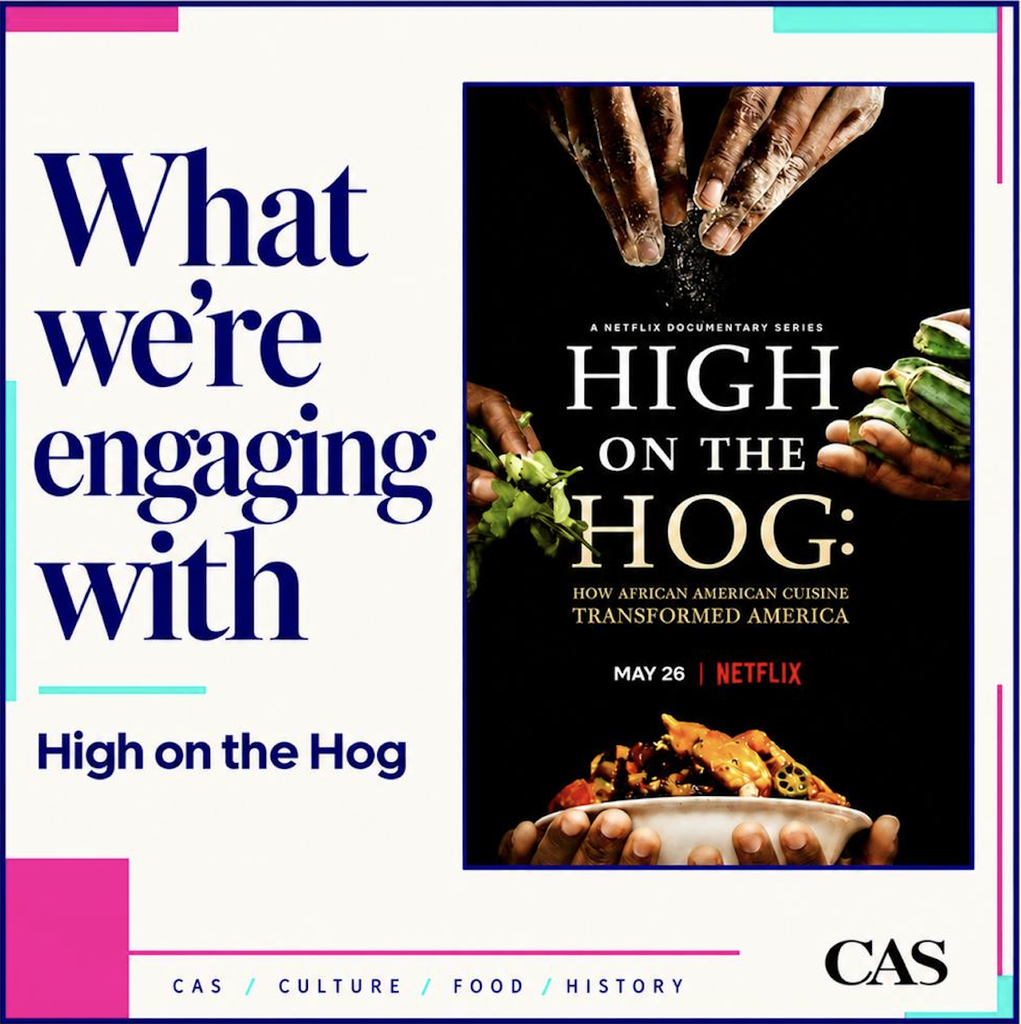
I recently rewatched High on the Hog: How African American Cuisine Transformed America, a documentary series that traces how Black foodways have shaped American culture. The episode that stayed with me most was “Feeding the Culture”, which turns to urban farming, community gardens and Karen Washington’s food-justice work.
Sharing our CEO, Samantha Allen‘s final instalment in CAS’s What We’re Engaging with series. In this final piece, she reflects on Bernice L. McFadden’s Sugar – a powerful novel about what happens when a woman is never given the freedom to define herself.
The piece also interweaves the lives and legacies of Betye Saar, Gloria Steinem and Dolly Parton, each of whom resisted easy categorisation and, in very different ways, shaped an identity on their own terms. Following reflections on Frida Kahlo and Grace Jones, this final instalment brings the series’ central question into sharp focus: who gets to decide who a woman is, and what does belonging to oneself and to others truly mean.
In the second part of Samantha Allen’s three-part contribution, she moves from Frida Kahlo to Grace Jones. While the first feature from CAS’ CEO and Founder considered what happens when a woman’s carefully constructed identity is interpreted, reproduced and commercialised by others, this piece asks how a woman can retain control of her own image throughout her lifetime, and preserve it with integrity as her legacy.
IntroducingWhat We’re Engaging With, a new three-part series fromCreative Arts Social, where staff and people from across the CAS community share the art, culture and ideas they’re engaging with across three connected pieces, using them as a starting point to explore wider questions around identity, belonging, and legacy.
The first three-part contribution comes fromSamantha Allen, Founder and CEO of Creative Arts Social. She begins withFrida Kahlo, reflecting on what happens when a woman’s carefully constructed identity becomes something interpreted, reproduced and commercialised by others.
Frida Kahlo spent her life authoring herself. Through self-portraiture, dress, symbolism and an uncompromising embrace of her Mexican identity, disability, pain and politics, she resisted the standards through which women, and particularly women’s bodies. were expected to be seen. Her image was not incidental to her work. It was one of the ways she claimed the right to define herself.
That was why I went to Frida Kahlo: Making of an Icon at Tate Modern expecting to encounter the artist behind one of the most recognisable faces in modern art and to learn more about someone whose work I already knew. Instead, I left asking what happens when a woman’s carefully constructed identity becomes an image that everyone else feels entitled to use.
There were only around 30 works by Frida Kahlo in the exhibition, and they were completely diluted by the approximately 200 works by contemporary artists and other figures, including her husband, Diego Rivera. Rather than giving greater context or insight into Kahlo’s work, many of these additions seemed to overshadow it. I came away feeling that the exhibition had taught me very little about Frida that I did not already know.