
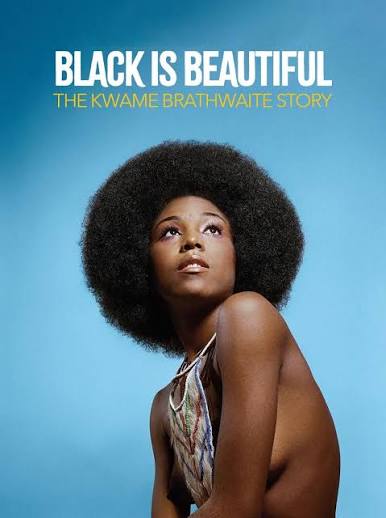
This is the second of our Brand and Digital Communications Officer Michelle Kambasha’s What We’re Engaging With. After food, she turns to photography, through Kwame Brathwaite’s Black Is Beautiful.
Part of my MA research looks at Black spectatorship: how Black audiences watch film and television that was rarely made with them in mind. One story from that research has stayed with me. In an early study of cinema audiences, a Black schoolgirl described coming home after a Clara Bow film, dressing like the star and looking at herself in the mirror, only to realise she could never become her. The film historian Agata Frymus uses moments like this to show that Black audiences could love Hollywood and feel shut out by it at the same time. Sara Ahmed’s work on affect helps explain why.
Ahmed argues that feelings don’t simply sit inside us. They circulate between people, images and objects, and through repetition they stick to some things more than others. Over time, certain objects become what she calls “happy objects”: things we come to see as naturally good, desirable or beautiful, because that feeling has been attached to them again and again. Taste, in this sense, is not purely personal. It is shaped by what has already been decided is good.
For much of the twentieth century, the images of beauty and glamour that circulated most widely were attached to whiteness. That is why the girl’s disappointment was not just a private feeling. It was produced by a whole culture of images that told her where beauty lived. Ahmed describes how people can end up “out of line” with what they are supposed to feel good about. Admiring those images meant admiring a standard she was never included in.
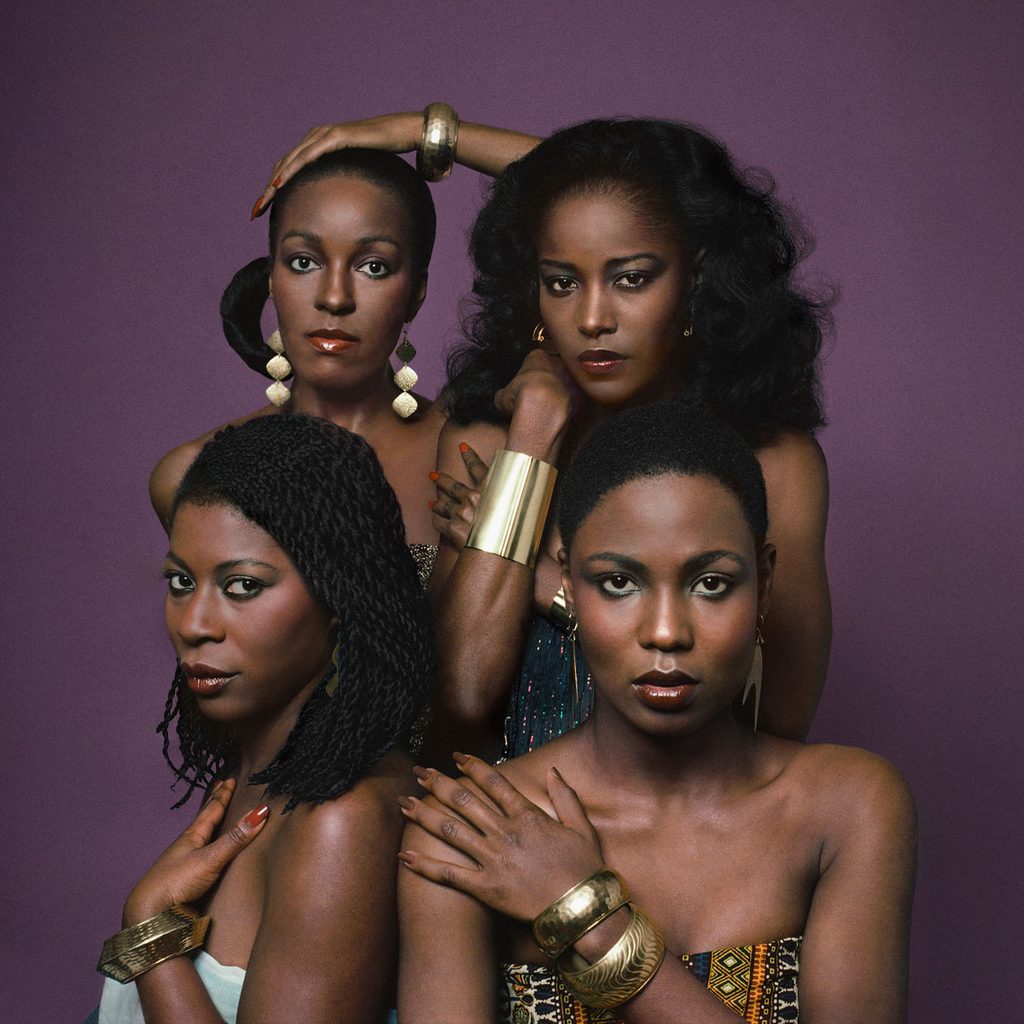
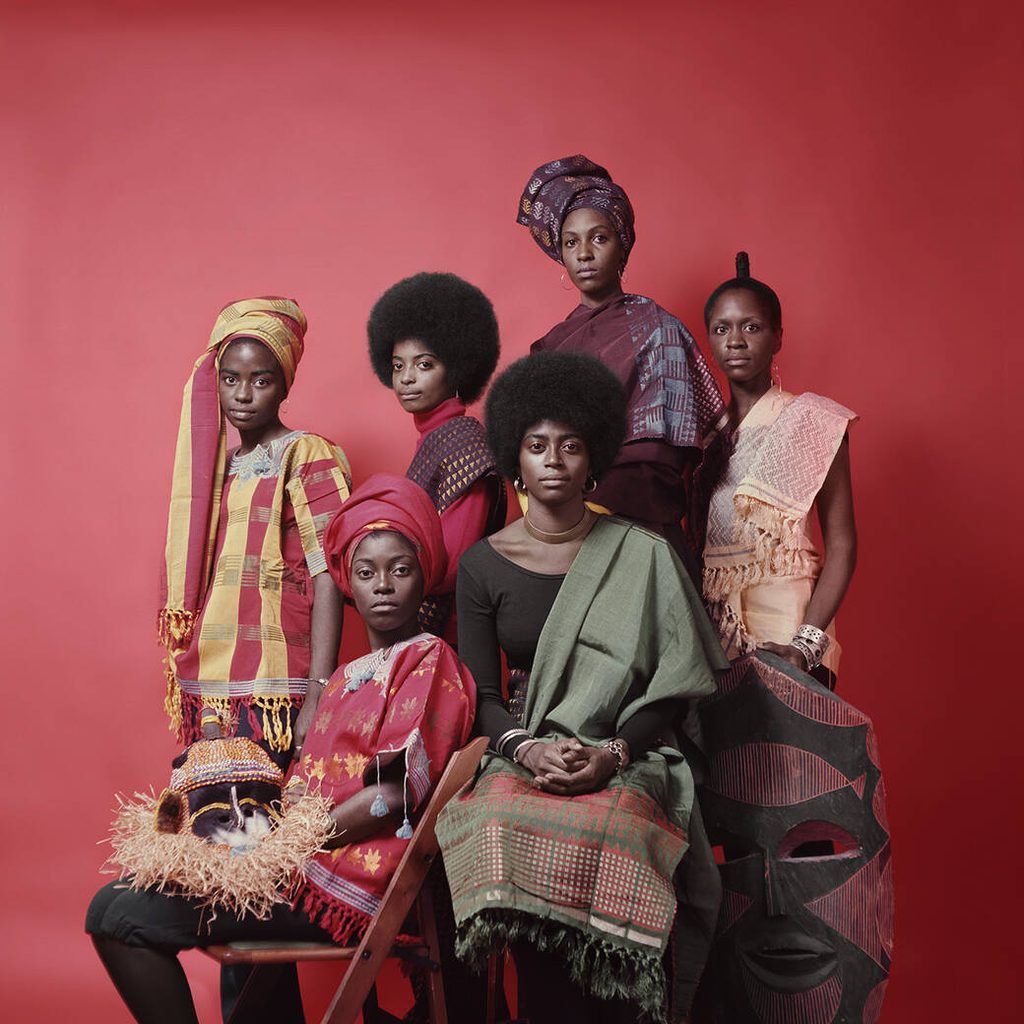
Kwame Brathwaite, Untitled (Four women with purple background), c. 1971. Courtesy Philip Martin Gallery, Los Angeles.
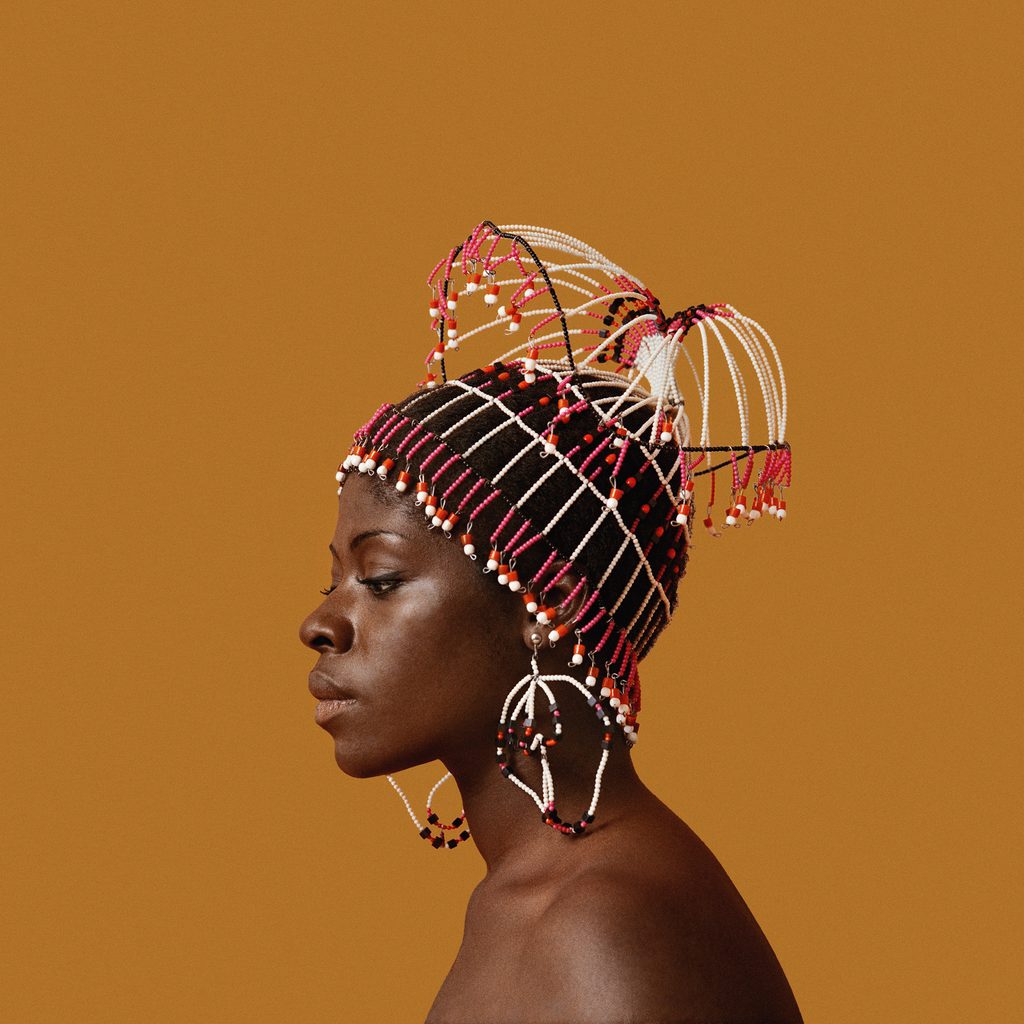
Brathwaite set out to change what those feelings were attached to. Born in Brooklyn in 1938 to Barbadian parents, he co-founded the African Jazz-Art Society and Studios (AJASS) with his brother Elombe in 1956, a collective of artists, writers and musicians influenced by Marcus Garvey and Carlos Cooks. In 1962 AJASS created the Grandassa Models, Black women who wore their hair natural and dressed in African-inspired designs, and staged “Naturally ‘62”, a fashion show at the Purple Manor jazz club in Harlem. Brathwaite’s photographs of the models and the jazz scene around them helped popularise the phrase “Black is beautiful”.
Set beside the Clara Bow story, his photographs read differently. The girl in the mirror was measuring herself against an image she could not become. Brathwaite offers an image in which Black women are the standard rather than the exception. bell hooks wrote about the “oppositional gaze”, a way of looking critically at images that exclude you. Brathwaite’s work goes a step further. It doesn’t only resist the old images; it redirects where pleasure, pride and glamour attach. Being seen in this way is part of how people come to feel they belong.
This matters to me as a communications person. In my work, success is usually measured in likes, clicks and shares. Those numbers tell me something moved, but not what people felt or why. Ahmed makes me want to pay closer attention to affect: whether people feel recognised, welcomed and proud, or quietly left out. That comes with responsibility, because attaching feeling to images is also what advertising has always done, often by selling a standard people can never meet. The challenge for cultural organisations is to work with feeling without manipulating it. Brathwaite’s photographs show what that can look like: their pleasure comes from recognition, not from wanting to be someone else.
Kwame Brathwaite, Photo shoot at a public school for one of the AJASS-associated modeling groups that emulated the Grandassa Models and began to embrace natural hairstyles. Harlem, ca. 1966; from Kwame Brathwaite: Black Is Beautiful (Aperture, 2019)
This is also why Brathwaite matters to the work we do at CAS. Our definition of belonging asks for more than access. It is about being seen, heard and understood, and being able to turn up as you are. The girl in the mirror had none of that. To share in the glamour on screen, she had to imagine becoming someone else. In our recent Belonging Note on “Feeling Seen”, we wrote about moments when “someone is being looked at without being seen.” Brathwaite’s photographs do the opposite. The Grandassa Models aren’t simply put in front of the camera; the images are built around them, and they are admired as they are. For the museums, galleries and cultural organisations we work with, the lesson is that belonging isn’t only about who gets invited in. It is also about what has been set up as beautiful and worth looking at once people arrive. As our definition puts it, the work is “not simply opening a door, but changing the conditions inside it.” In 1962, Brathwaite was already doing exactly that.
I’d recommend spending time with Black Is Beautiful, whether through the Aperture book or the many collections of his work online. The photographs are joyful and stylish, and they still ask a question that feels as relevant now as it did in 1962: who decides what beauty looks like?
Sources and further reading
Aperture — Kwame Brathwaite: Black Is Beautiful
Hyperallergic — Kwame Brathwaite, “Black Is Beautiful” Photographer, Dies at 85
JSTOR Daily — Kwame Brathwaite Showed the World That Black Is Beautiful
Frymus — White Screens, Black Fandom: Silent Film and African American Spectatorship in Harlem
Ahmed, S. (2004) The Cultural Politics of Emotion. Edinburgh University Press.
Ahmed, S. (2010) The Promise of Happiness. Duke University Press.
hooks, b. (1992) ‘The Oppositional Gaze: Black Female Spectators’, in Black Looks: Race and Representation. South End Press.