

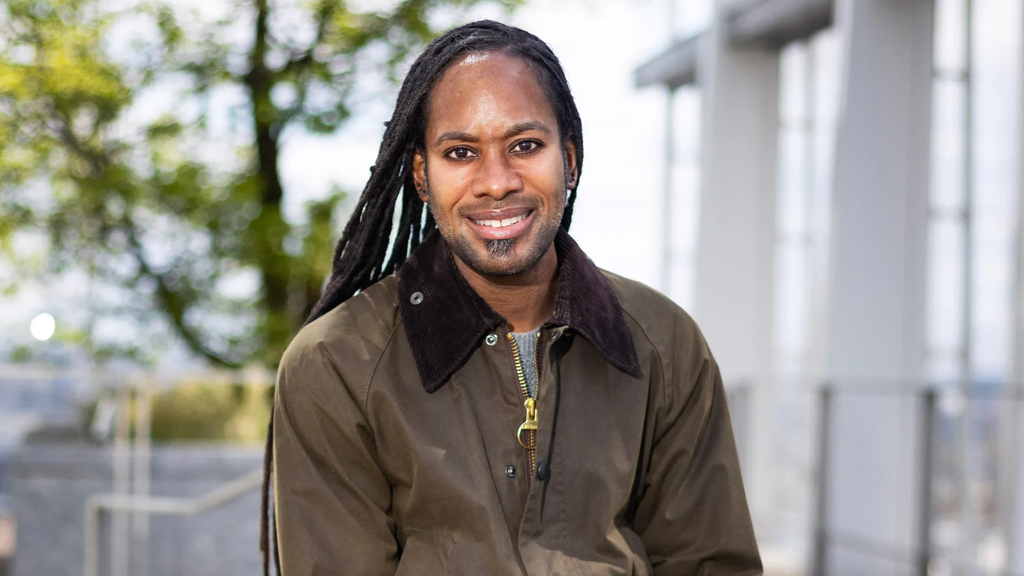
Jason Arday’s resignation isn’t just about Jason Arday. It’s about what happens when Black people in positions of influence become symbols in a much bigger culture war. For years we’ve been told that diversity, equity and inclusion has taken over universities. That Black academics are being handed opportunities at the expense of “merit”. That institutions have bent too far in the name of anti-racism. But where is the evidence?
Research from 2025 suggests that Black professors make up around less than 1% of professors in UK universities. If DEI has really transformed higher education, someone forgot to tell the statistics. What we’re witnessing isn’t the triumph of diversity. Rather, it’s the backlash against even modest progress.
The way Arday’s resignation has been covered is revealing. There has been an unmistakable sense of racist schadenfreude in parts of the reaction. For some commentators, Arday’s resignation has been greeted almost triumphantly, not simply as the fall of one academic, but as “evidence” that anti-racism, DEI and Black scholarship were always built on shaky ground. Headlines have declared that “PR hijacked elite universities,” questioned “the impact of the Jason Arday saga on academia,” claimed “Cambridge hired Arday after listening to Black students,” and described him as “the gift that keeps on giving.” The conversation quickly became a referendum on DEI, anti-racism and the legitimacy of Black scholarship itself.
The Guardian’s Jason Okundaye offers an important counterpoint. Rather than treating Arday as proof that diversity has failed, he argues that this moment reveals something far more unsettling: how readily one Black academic can become a proxy for wider anxieties about race, merit and belonging, and how quickly individual controversy is weaponised to undermine broader efforts towards racial justice.
Again and again, the same pattern emerges. A prominent Black academic speaks publicly about race, inequality or structural change. Their work is scrutinised more intensely than their peers. Their credibility is questioned. Headlines become personal. Online campaigns gather momentum. Before long, the conversation is no longer about the issues they raised, but about whether they deserve to be there at all.
As journalist Nesrine Malik observes, “The standards and expectations of Black people in public life change quickly and dramatically, and often collide.” That contradiction is at the heart of this debate. Black leaders are expected to embody institutional commitments to diversity while simultaneously becoming lightning rods for criticism whenever those same commitments are challenged.
We’ve seen similar patterns surrounding professor Kehinde Andrews, whose work and Black Studies programme have become recurring targets in wider debates about race and higher education and the UK’s first Black professor Hakim Adi, following the closure of the UK’s only MA in the History of Africa and the African Diaspora. More recently, photographer and cultural figure Misan Harriman has also found himself at the centre of sustained public attacks that sought to undermine not only his work but his legitimacy. Different institutions. Different professions. Different circumstances. The same underlying question remains: who gets to hold authority, expertise and influence, and whose legitimacy is continually put on trial?
This isn’t unique to Jason Arday. It reflects a broader pattern in which Black academics, cultural leaders, journalists and public figures become proxies in wider ideological battles. We have also seen Black Studies courses closed, anti-racist programmes quietly dismantled, and the legitimacy of scholarship on race repeatedly questioned. Each case is presented as an isolated incident. Together, they reveal a pattern.
This is how structural racism often operates. Not always through overt discrimination, but through attrition. Through relentless scrutiny, discrediting, politicisation and the constant need to prove legitimacy in ways others never have to. The cumulative effect is exhausting, and it sends a message far beyond the individual at the centre of the story. The individual becomes the story. The system disappears.
The message is subtle but unmistakable: your success is always conditional. Your expertise is always open to challenge. Your legitimacy can always be withdrawn. The real question isn’t whether DEI has gone too far. It’s why so many people believe that seeing a handful of Black people in positions of power is evidence of radical change, when those positions remain the exception rather than the rule. Until we’re willing to talk honestly about that contradiction, we’ll keep mistaking backlash for equity.